PropNex Picks
|January 13,2026Small Landed Homes
Share this article:
Owning a landed home in Singapore has always been the ultimate flex. But for many buyers, the price tags can feel out of reach.

Luckily, small landed homes have been trending lately. Yup. Landed doesn't always mean bungalows with koi ponds and helpers' rooms. These homes emerged as a compromise: a more affordable landed option with just enough space to fit a growing family. This segment has been gaining attention as buyers look for ways to enjoy landed living without committing to bungalow-scale prices. More importantly, it reflects how buyers and developers are adapting to land scarcity and rising costs in Singapore's property landscape.
So, without further ado, let's explore this somewhat niche segment.
Landed homes come in different forms, from Good Class Bungalows (GCB) to semi-Ds. But generally, in Singapore, they are classified into two categories: strata and non-strata. With non-strata, or regular landed homes, you own the house as well as the land itself. Whereas with strata, you only own your house, but you share the land, facilities, and entrance with your neighbours. You can also click here for more details on each type of property.
A small landed home, or also referred to as compact landed units, can be strata or non-strata. Their plot of land usually ranges between 1,600 and 3,000 sq ft. Of course, this doesn't necessarily make the house "tiny". Many condos and flats are much smaller than this. But, it does mean a more compact and efficient layout compared to traditional luxury bungalows.
In other words, the emphasis is on efficiency rather than excess space.

Recent launches of compact landed homes have seen strong buyer interest. Parkwood Collection, a 99-year leasehold project with 53 units launched in 2020, and Belgravia Ace, a freehold strata landed project with 107 units launched in 2022, were both fully sold.
Then we have Springleaf Collection, a 999-year landed development along Meng Suan Road that launched in August. The project comprises 10 five- and six-bedroom units with prices starting slightly above $5 million. Impressively, 80% of the units were sold within just three months!
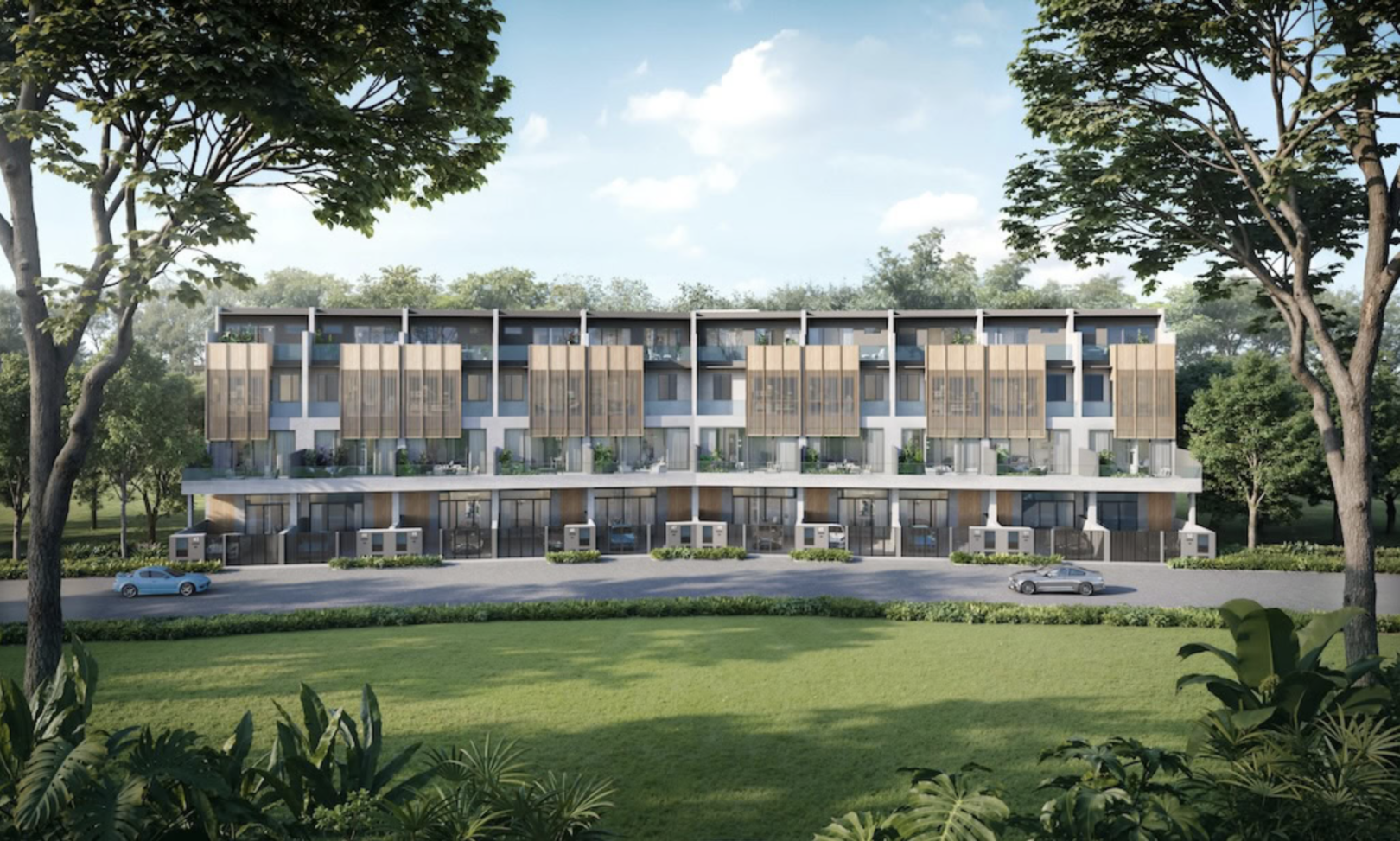
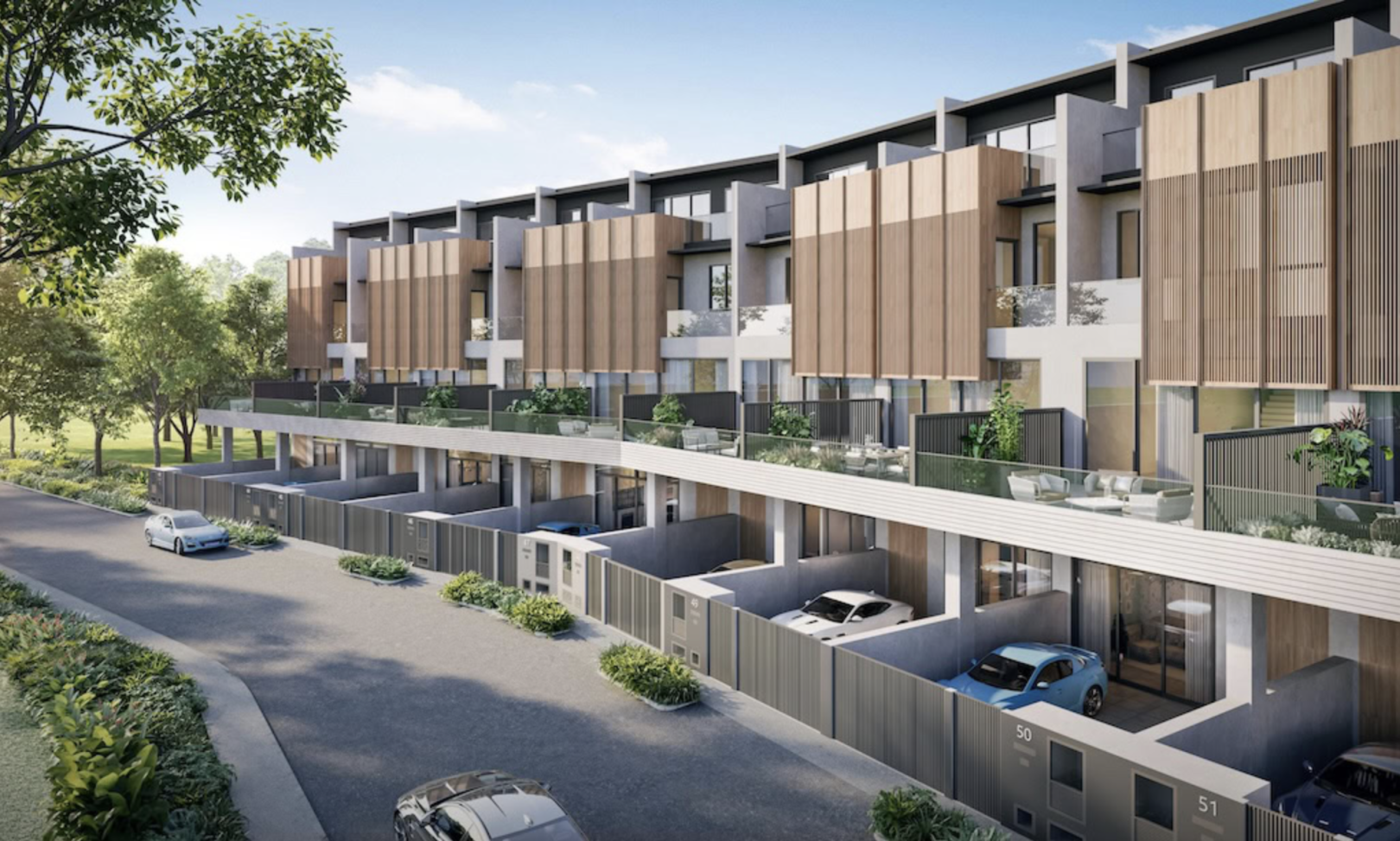
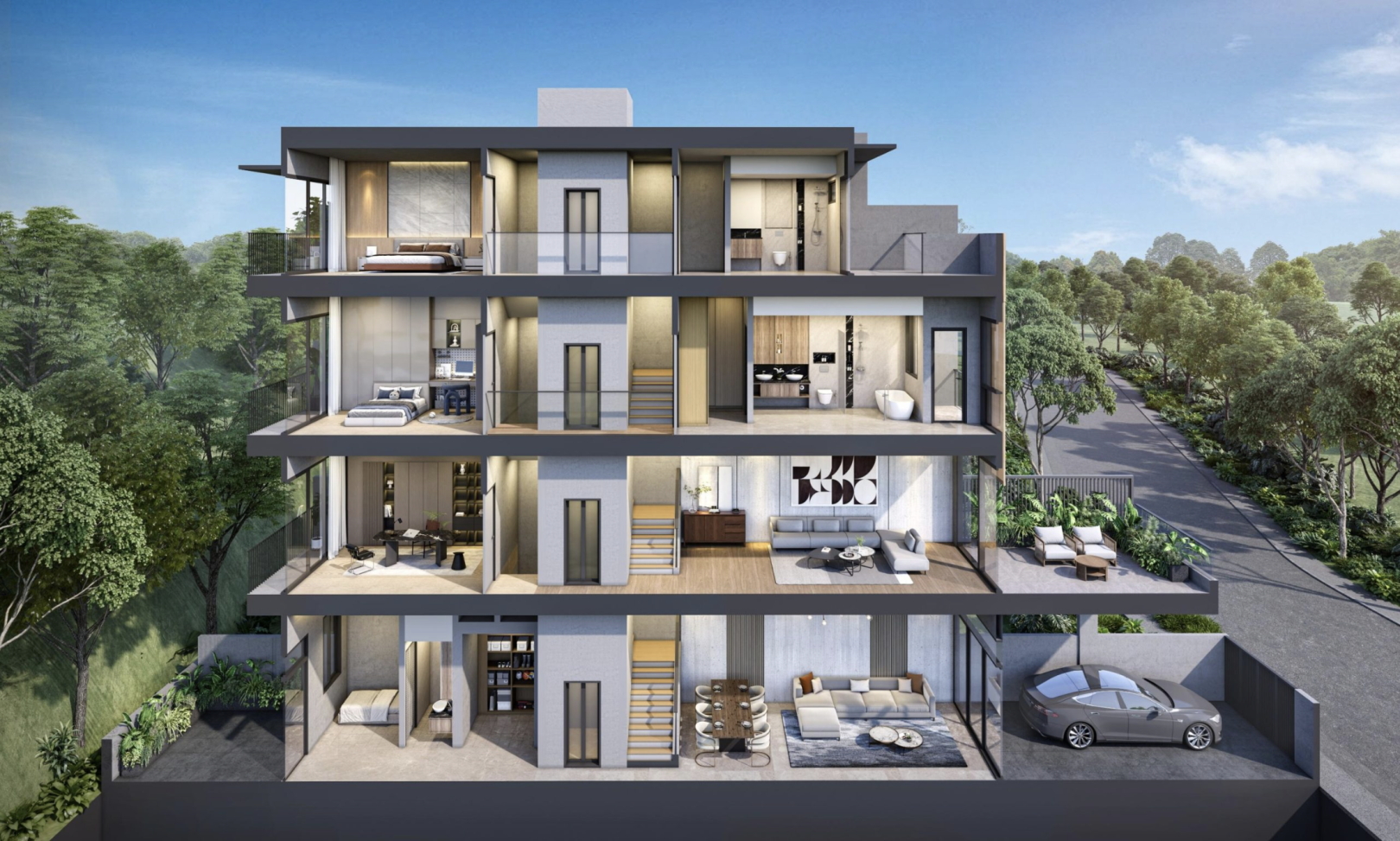
Source: Springleaf Collection
We'll likely see more similar developments in the coming years too!
So, why the sudden interest in these small landed homes?
According to the Singapore Department of Statistics, the amount of private flats and condos went up by 228% in the past 25 years, from 114,532 units in the year 2000 to 375,612 units in 2025. On the other hand, landed home supply has actually been relatively stagnant during the same period, only rising 12% from 67,229 units to 75,338 units.
Although the lesser supply naturally adds a sense of scarcity, property experts believe it isn't the main reason demand has picked up. Rather, it's the shifting buyer preferences, rising land and construction costs, and stricter regulations that are driving these trends.
Today, younger families are prioritising affordability and efficient layouts. Meanwhile, escalating land and construction costs have reduced the viability of larger landed homes at accessible price points. So, smaller landed homes kind of bridge this gap.
For buyers, this means access to landed living at a more manageable quantum. For developers, it allows projects to remain commercially viable despite tighter planning controls.
Generally, there are three main buyer groups:
- Upgraders: Owners of flats or condos who've already gained capital appreciation who want more space and a landed lifestyle while keeping the price tag somewhat sensible.
- Growing families: Those who need room to grow, often with kids and helpers.
- Landed fans: People who've long dreamed of owning a landed property and are okay with a more compact unit to make it financially attainable.
What these buyer groups share is not budget constraint, but value discipline. A willingness to trade excess space for land ownership and privacy.
Small landed homes definitely have plenty of appeals. For one, a more compact plot size translates to a lower entry point compared to larger landed estates. As we've discussed earlier, this has made them a more realistic upgrade option.
As a reference point, many small landed homes today transact from the mid-$4 million range onwards, which places them closer to large family-sized condos than traditional landed estates, but still well below bungalow-level pricing.
Furthermore, landed homes in general offer a level of privacy you can't get with flats or even condos. There are no shared corridors or lifts and no common spaces. Plus, you get your own gate, driveway, and outdoor area. It's a different lifestyle that some families might value and appreciate.
Land ownership is another key factor, at least for non-strata units. In land-scarce Singapore, owning land is definitely something that you can boast about. It's a prestige that many people envy, even if it's on a smaller scale.

Not to mention that land scarcity has historically supported long-term value stability, making landed homes especially attractive to investors. In the past 5 years alone, the resale price of small landed homes have gone up by 60-76%. This suggests that capital appreciation has generally been resilient.
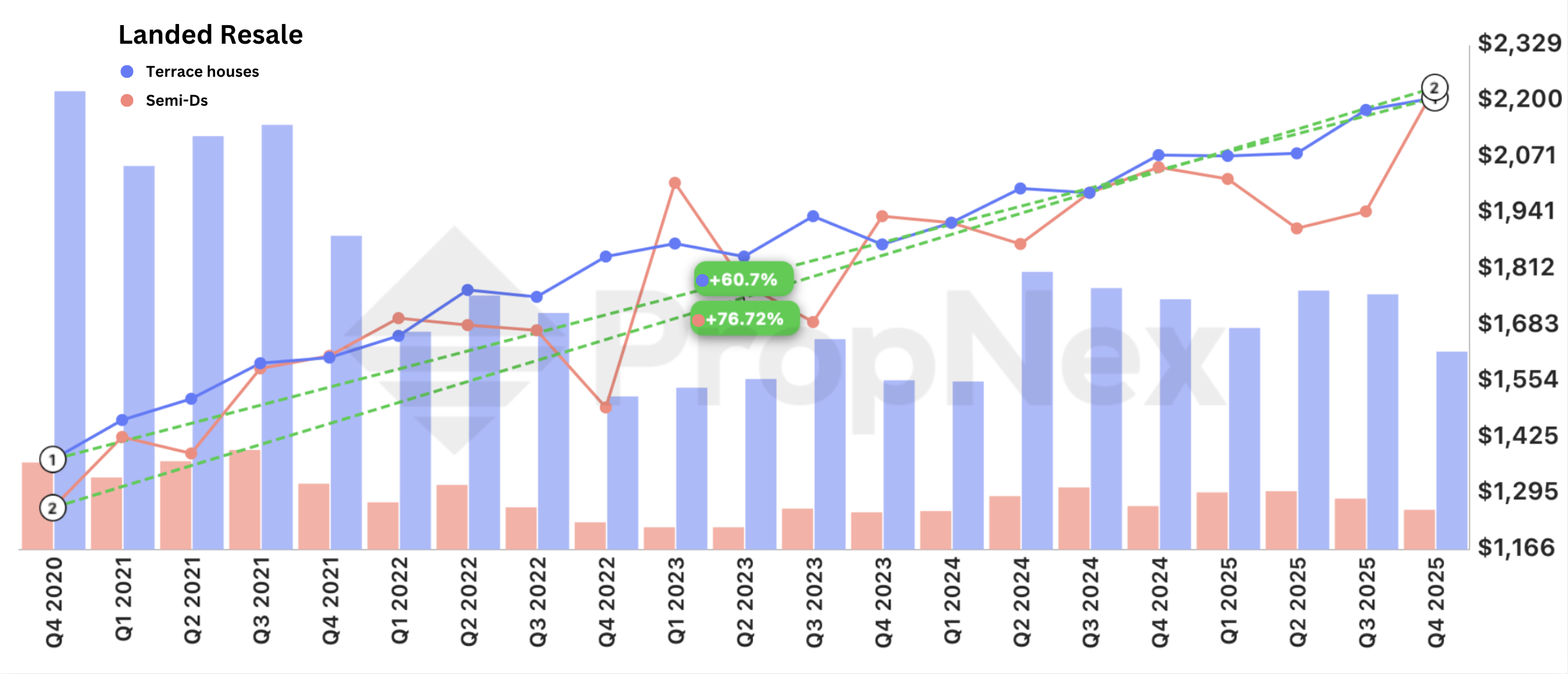
Source: PropNex Investment Suite
However, don't forget that like any other property, performance also depends on other factors like entry price, location, and holding period.
But of course, it's not all sunshine and rainbows. There are also challenges to consider. While demand is being supported by changing buyer preferences, analysts point out that landed housing supply remains constrained due to strict zoning and land-use controls.
In fact, URA has not released 99-year landed sites for some time, and minimum lot-size rules limit how existing landed plots can be subdivided. That's because URA's control plans vary by landed housing area, meaning not all sites can be redeveloped into smaller homes. For instance, plots zoned for bungalows generally cannot be subdivided into semi-Ds. This means scarcity cuts both ways. While it supports long-term value, it also limits flexibility in redevelopment and future supply.
And while they have generally held their value well, their niche positioning can present challenges as you try to exit. Finding the right buyer may take longer compared with HDB flats or condos, simply because the pool of potential buyers is more limited.
On a more practical standpoint, homeowners need to think about maintenance. Unlike in HDB or condos, where upkeep is generally handled by management, you have to do everything yourself (and of course pay for everything yourself). That said, smaller landed homes do require less maintenance than larger ones, so it's not as bad.
Additionally, gaining more privacy means losing the convenience of shared facilities. Unlike condominiums, landed homes typically don't come with communal amenities such as swimming pools, sports courts, or gyms. So if you really want these amenities, you might have to sign up for a bunch of different subscriptions that may end up costing more.
In any case, there's more to owning a landed home than meets the eye. If you want to read up on the broader considerations, we've covered this in a separate article on landed home ownership.

Ultimately, small landed homes aren't cheap and they aren't for everyone. But, they do offer a lower entry point for landed homes, which may be appealing to homebuyers and investors who value privacy, land ownership, and long-term stability. However, as with any major property decision, it's important to understand what you're signing up for. Not just the upsides, but also the responsibilities and drawbacks.
This is why planning becomes especially important for niche assets like small landed homes. Decisions around entry price, holding power and exit timing matter far more when the buyer pool is narrower and price points are higher. It's not just about whether or not you can afford it, but also whether it makes sense in your long-term property journey.
These are themes we explore within the Property Wealth System (PWS) framework, which focuses on making informed decisions around entry, holding, and exit, especially for niche assets like landed homes.
If you'd like to deepen your understanding, you can explore our upcoming masterclasses or free seminars at your own pace.
Views expressed in this article belong to the writer(s) and do not reflect PropNex's position. No part of this content may be reproduced, distributed, transmitted, displayed, published, or broadcast in any form or by any means without the prior written consent of PropNex.
For permission to use, reproduce, or distribute any content, please contact the Corporate Communications department. PropNex reserves the right to modify or update this disclaimer at any time without prior notice.




 We Use Cookies